Help Classify Arabic into Dialects!
This task is for Arabic speakers
who understand the different local Arabic dialects (اللهجات العامّية، أو الدّارجة),
and can distinguish them from Fusha Arabic (الفصحى).
Below, you will see several Arabic sentences. For each sentence:
- Tell us how much dialect (عامّية) is in the sentence, and then
- Tell us which Arabic dialect the writer intends.
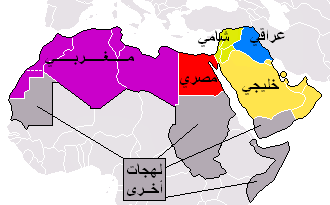
This following map explains the dialects:
|
|
PLEASE READ the following. You MUST understand the classifications, otherwise your work might be rejected!!
- Levantine (شامي) does NOT mean "Syrian" only.
It includes Syrian, but ALSO:
Jordanian is Levantine, Palestinian is Levantine,
and Lebanese is Levantine.
That's why all these countries are green in the map.
- Maghrebi (مغربي) does NOT mean "Moroccan" only.
It includes Moroccan, but ALSO:
Algerian is Maghrebi, Tunisian is Maghrebi,
and Libyan is Maghrebi.
That's why all these countries are purple in the map.
- The word "dialect" (لهجة) does NOT mean "spelling mistake" (خطأ إملائي).
If the writer was trying to write in 100% فصحى, classify it as No dialect, even if it has some spelling mistakes.
- If the sentence is NOT Arabic (i.e. Farsi, Urdu, English, or incomprehensible), please mark it as Not Arabic.
- If you see a blank line, please mark is as Not Arabic and mention it in the comment section. Thanks!
- NOTE: If the sentence contains another language in addition to Arabic, please check "contains another language" and indicate the
language if you recognize it. Then indicate the level and dialect of ONLY the Arabic parts of the sentence. If the sentence is ENTIRELY a language not Arabic, please mark it as Not Arabic.
|
|
Informed Consent Form
Purpose of research study: We are collecting human annotations to improve automatic translation of Arabic into other languages. These annotations might be class labels, judgments of output quality, or actual translations.
Benefits: Although it will not directly benefit you, this study may benefit society by improving how computers process human languages. This could lead to better translation software, improved web searching, or new user interfaces for computers and mobile devices.
Risks:There are no risks for participating in this study.
Voluntary participation:You may stop participating at any time without penalty by clicking on the “Return HIT” button, or closing your browser window.
We may end your participation if you do not have adequate knowledge of the language, or you are not following the instructions, or your answers significantly deviate from known translations.
Confidentiality: The only identifying information kept about you will be a WorkerID serial number and your IP address. This information may be disclosed to other researchers.
Questions/concerns: You may e-mail questions to the principal investigator, Chris Callison-Burch. If you feel you have been treated unfairly you may contact the Johns Hopkins University Institutional Review Board.
Clicking on the “Accept HIT” button indicates that you understand the information in this consent form. You have not waived any legal rights you otherwise would have as a participant in a research study.
|